C++20 / Cross-platform development · 2026
Runi
A cross-platform running app prototype with GPS route tracking and comparisons against recorded runs.
Work in progress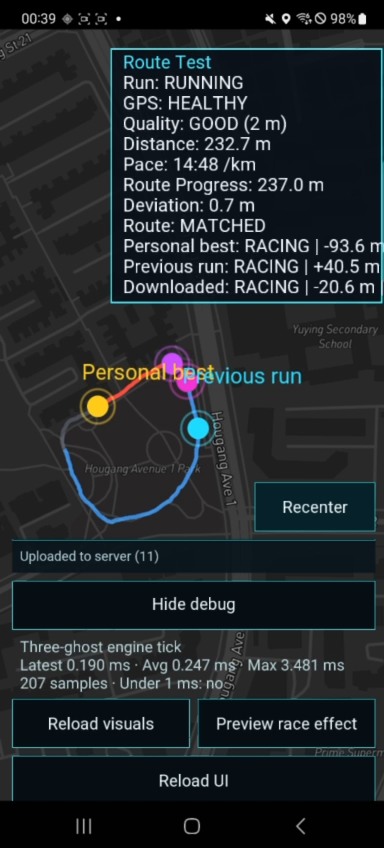
My contribution
C++ core and headless tests
I set up the repository and CMake builds, pinned dependencies, and documented a C++20 core API for input, fixed-timestep updates, and interpolated render state. I added a check to keep platform and clock headers out of the core. Six doctest scenarios run without a display and cover input, interpolation, determinism, and long-run stability. I verified that the tests caught a deliberate regression.
Desktop rendering and input
I used SDL3 for the window, input, and OpenGL context, and built the renderer and shaders for a rotating triangle prototype. I added a 60 Hz simulation loop, keyboard and touch controls, and an in-app debug overlay that reports timing, platform, and build information.
Android build and device testing
I connected Gradle to the shared CMake build for ARM64 and tested the OpenGL ES 3.0 prototype on a Pixel 9a. I adjusted touch input and display scaling for the phone and handled backgrounding and resume in the platform layer.
Jenkins and build standards
I configured Jenkins to build and test Linux desktop, Android, the Go backend, and project tools. I verified that a failing check blocked a GitHub pull request and that merging the fix triggered a clean build. I also set C++ naming rules with clang-tidy.
The CI plan also includes broader sanitizer, data, API, and tool checks, along with nightly performance tracking.
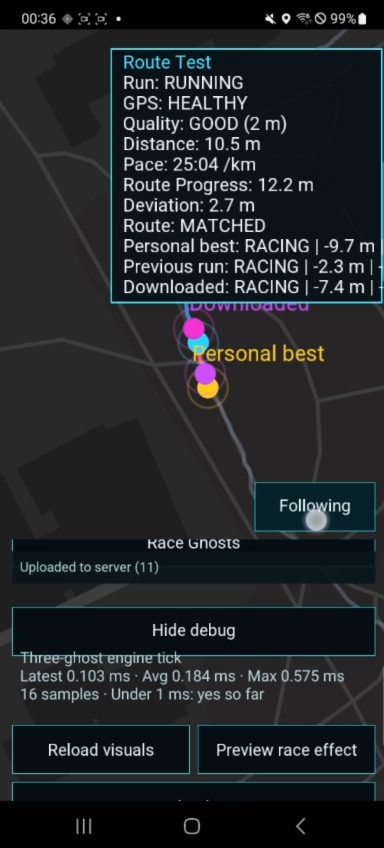
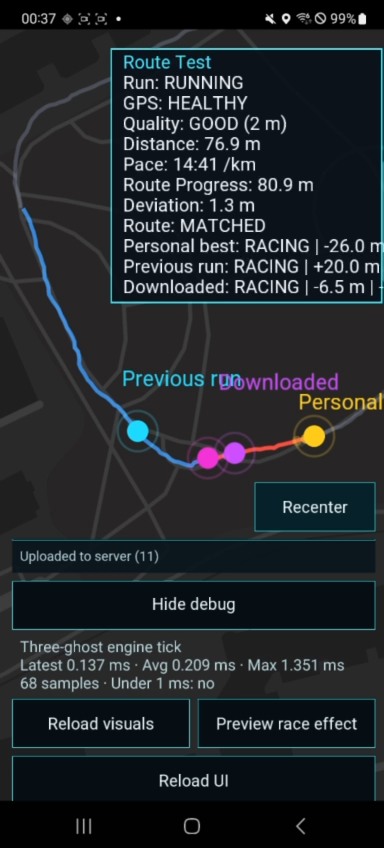
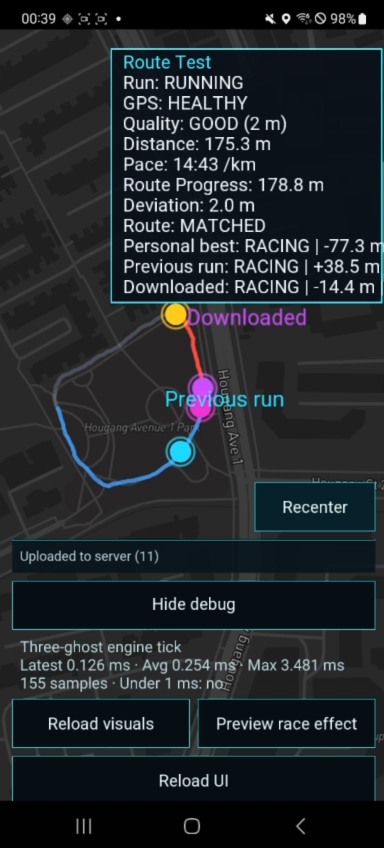
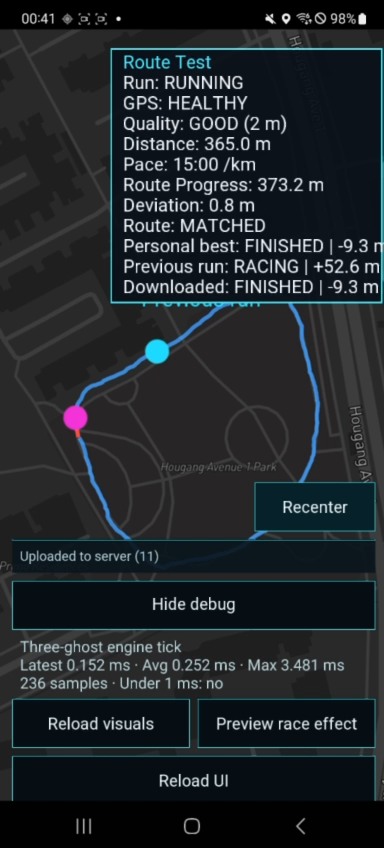
Development screenshots